Enjoy discounts on healthy lifestyle products!

Confronting GBV: A Guide for South Africa
Gender-based violence (GBV) in South Africa is a critical issue, affecting one in five women. This guide offers survivors actionable resources, coping strategies, and hope for reclaiming their agency amidst the challenges they face.
Bangile Mahlombe
2/17/20252 min read
GBV Trauma Recovery Resources: Healing Pathways for South African Survivors
GBV trauma extends beyond physical harm, affecting mental health, self-worth, and community ties.
Common psychological impacts include:
Post-Traumatic Stress Disorder (PTSD): Flashbacks, hypervigilance, and nightmares.
Depression and Anxiety: Persistent sadness, isolation, or panic attacks.
Shame and Guilt: Societal stigma often silences survivors.
Did You Know?
South Africa’s Thuthuzela Care Centres (TCCs) have assisted over 200,000 survivors since 2006, offering medical, legal, and psychological support under one roof.
Immediate Steps After Experiencing GBV
1. Ensure Immediate Safety
Contact Law Enforcement: Dial 10111 for SAPS emergency response.
Visit a Thuthuzela Care Centre: Access free medical care (including PEP for HIV prevention) and forensic services.
Safe Housing: Shelters like POWA (People Opposing Women Abuse) provide temporary refuge.
2. Document the Incident
Medical Report: Essential for legal cases. Available at public clinics or TCCs.
Photos/Diary: Record injuries and details while fresh.
3. Seek Emotional First Aid
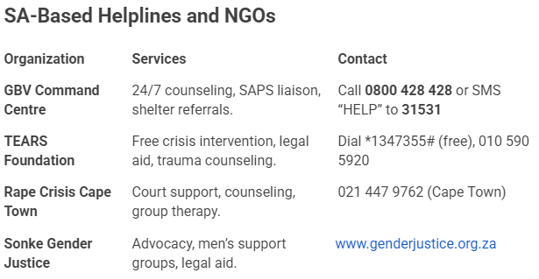
National GBV Helpline: Call 0800 428 428 (24/7, free from any phone).
SADAG: SMS “HELP” to 31531 for counseling referrals.
LGBTQ+ Focus:
OUT Wellbeing: Counselling for LGBTQ+ survivors. Call 012 430 3272.
Iranti: Legal support for queer communities. www.iranti.org.za.
Coping Strategies for Trauma Recovery
1. Psychological Healing
Trauma-Informed Therapy: Seek psychologists specializing in GBV (referrals via SADAG).
Support Groups: Join Ubuntu-inspired circles like Khululeka Grief Support.
Mindfulness Practices: Use apps like Buddhify for guided meditation.
2. Physical Wellness
Yoga and Movement: Organizations like Project Dignity offer free classes for survivors.
Nutrition: Access food parcels via The Angel Network while rebuilding stability.
3. Community and Cultural Support
Traditional Healing: Collaborate with sangomas for rituals (e.g., ukubuyisa for spiritual cleansing).
Art Therapy: NGOs like The Justice Desk use drama and art to process trauma.
Legal Resources and Rights
1. Protection Orders
How to Apply: Visit your local magistrate’s court (free service). NGOs like WISE assist with paperwork.
Domestic Violence Amendment Act (2021): Expands protections to include online harassment and coercive control.
2. Legal Aid
Legal Resources Centre (LRC): Free representation for GBV cases. www.lrc.org.za.
Pro Bono Attorneys: Contact the Law Society of SA (012 366 8800).
Building a Long-Term Safety Plan
Secure Housing: Collaborate with NGOs like Haven Night Shelter.
Financial Independence: Access skills training via SA Women in Need.
Support Network: Identify trusted friends, family, or social workers.
Example Safety Plan Template:
Emergency Contacts: List helplines, shelters, and a code word for danger.
Safe Routes: Map paths to police stations or neighbors.
Digital Safety: Use apps like Namola for SOS alerts.
FAQs for GBV Survivors
Q: Can I access help anonymously?
A: Yes. Shelters and helplines protect your identity; TCCs offer confidential medical care.
Q: What if I can’t afford therapy?
A: NGOs like POWA and Rape Crisis provide free counseling.
Q: How do I support a survivor?
A: Listen without judgment, avoid “why” questions, and share resources like the GBV helpline.
Key Government and Community Initiatives
Thuthuzela Care Centres (TCCs): 55 centres nationwide. Locate via www.justice.gov.za.
GBVF Response Fund: Funds grassroots NGOs (apply via www.gbvfund.org.za).
#HearMeToo Campaign: Amplifies survivor voices through social media advocacy.
Conclusion: Reclaiming Power Through Community
Healing from GBV is not a solitary journey. As South African activist Lebogang Mashile reminds us: “Your voice is the first weapon you own.” By leveraging community resources, cultural resilience, and legal safeguards, survivors can rebuild lives anchored in dignity and hope.
Call to Action:
If you or someone you know needs help, dial 0800 428 428 now.
Share this guide using #EndGBVSA to break the silence.